
Why Shingle Deterioration Is a Sign of Aging, Not a Small Repair
Granule Loss on Asphalt Shingles
What Granules Do and Why Their Loss Is a Serious Warning
What is Granule loss?
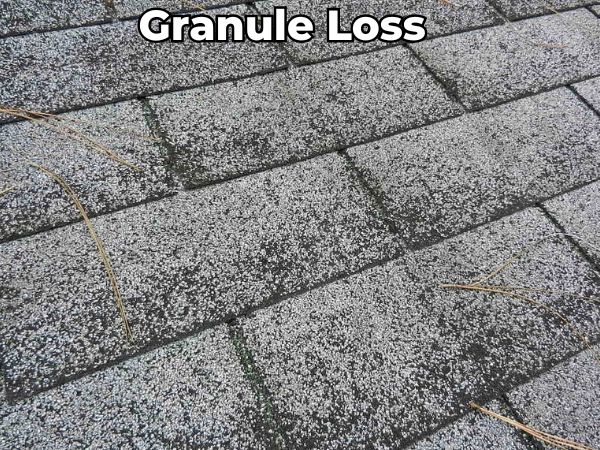
Granules are the protective outer layer of asphalt shingles, and when granule loss begins, it signals that the roof’s primary defense system is failing. These granules shield the asphalt beneath from ultraviolet exposure, regulate surface temperature, and help prevent premature drying and cracking. When homeowners notice granule loss on roof surfaces or find excessive granules collecting in gutters and downspouts, it is often a sign that the shingles are no longer aging normally. In particular, granule loss on shingles exposes the asphalt base to direct sunlight, accelerating deterioration across the roofing system. While a small amount of granule shedding can be expected over time, widespread or uneven loss typically indicates the roof is entering the later stages of its service life and requires professional evaluation.
Environmental, Structural, and Material Factors at Work
What Causes Granule Loss Over Time
Several factors contribute to granule loss, and most are related to long-term exposure rather than isolated damage. Natural aging from constant sun exposure gradually weakens the adhesive bond holding granules in place, while temperature fluctuations cause repeated expansion and contraction that loosens them further. Severe weather events can accelerate granule loss on roof surfaces, especially after hailstorms or periods of high wind combined with heavy rain. Poor attic ventilation is another common contributor, as trapped heat can overcook shingles from below, causing granule loss on shingles to occur faster than expected. In some cases, improper installation or manufacturing defects may also lead to premature deterioration, often appearing years earlier than a roof’s intended lifespan.

Why Spot Repairs Do Not Solve the Underlying Problem
When Granule Loss Signals the Need for Replacement
Many homeowners assume granule loss can be corrected with a simple repair, but this type of damage is rarely isolated. Once granules detach, they cannot be effectively replaced, and the exposed asphalt begins absorbing heat and moisture at a much higher rate. This leads to faster breakdown across the entire roofing surface, making granule loss on roof areas a system-wide issue rather than a localized defect. As deterioration spreads, granule loss on shingles increases the risk of leaks, structural damage, and unexpected failure. When granules are consistently visible in gutters or bare patches appear across multiple slopes, replacement is often the most cost-effective and reliable solution to restore long-term protection.

Schedule a Professional Roof Inspection Before Damage Spreads
Do Not Ignore the Warning Signs
If you are starting to notice granules collecting in your gutters, bare patches on your shingles, or uneven wear across your roof, it may be a sign that your roofing system is nearing the end of its service life. Granule loss is not just cosmetic—it directly affects your roof’s ability to protect your home from heat, moisture, and weather damage. Waiting too long can lead to leaks, interior damage, and higher repair costs. Our team at Fisher Construction offers professional roof inspections to determine whether your roof can be safely maintained or if replacement is the smarter long-term solution. If you are seeing warning signs of granule loss, contact us today to schedule an inspection and get clear, honest guidance on the next steps for protecting your home.